
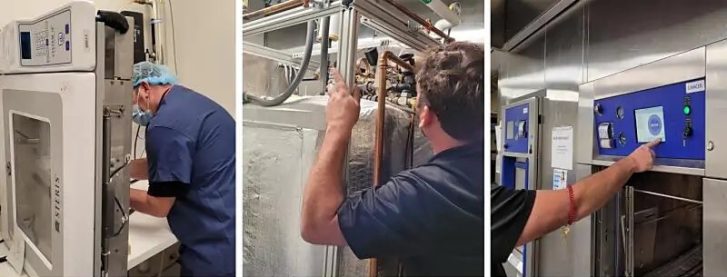
Sterile Processing Departments (SPD) and Central Sterile Services Departments (CSSD) can’t afford downtime. When sterilizers, washer-disinfectors, ultrasonic cleaners, or cart washers go out of spec—or go down entirely—case delays, rework, and compliance risk follow quickly.
At Auxo Medical, we help hospitals, surgery centers, and clinics keep their sterile processing equipment reliable, validated, and ready for daily demand. From preventive maintenance to emergency repairs, we focus on fast response, clear communication, and service documentation you can stand behind.
What Is Sterile Processing Equipment (and Why It Matters)?
Sterile processing equipment is the backbone of instrument reprocessing. Each system plays a specific role in cleaning, disinfecting, sterilizing, and drying surgical instruments and trays. When even one step is inconsistent—temperature, pressure, exposure time, water quality, detergent dosing, or drying performance—your entire workflow can suffer.
Proper maintenance isn’t just about keeping machines running. It’s about maintaining repeatable, verifiable outcomes that support patient safety and help you meet expectations from accrediting bodies and internal quality teams.
Sterile Processing Equipment We Service
We service and support a wide range of SPD/CSSD equipment commonly used in healthcare facilities, including:
- Steam sterilizers / autoclaves
- Low-temperature sterilization systems (model-dependent)
- Washer-disinfectors
- Ultrasonic cleaners
- Cart washers
- Steam generators and related utility components
- Water treatment and filtration systems that impact reprocessing performance (facility-dependent)
- Drying cabinets and drying-related systems (where applicable)
If you’re not sure whether your specific unit is covered, we can review your equipment list and help you build a practical service plan.
Our Sterile Processing Equipment Services
Preventive Maintenance (PM) for SPD Equipment
Preventive maintenance is the most cost-effective way to reduce unexpected downtime and extend equipment life. Our PM visits are designed to catch small issues early—before they turn into cycle failures, wet packs, repeat loads, or canceled cases.
Typical PM support may include:
- Inspection of wear components (gaskets, seals, filters, strainers)
- Checks for leaks, alignment issues, and door function
- Verification of critical operating parameters (as applicable)
- Cleaning and adjustment of key assemblies
- Review of error history and performance trends (where available)
- Documentation for your maintenance files
Sterile Processing Equipment Repair (On-Site Service)
When equipment fails, the priority is getting your department back online quickly and safely. We provide troubleshooting and repairs for mechanical, electrical, and performance-related issues—while keeping you informed about findings, options, and next steps.
Common repair needs we see include:
- Sterilizer door problems, seal failures, or chamber leaks
- Heater and temperature-control issues
- Pressure instability or slow come-up times
- Drain, pump, or spray-arm performance issues (washers)
- Ultrasonic cavitation problems and transducer-related failures
- Sensor errors, alarms, and intermittent faults
- Inadequate drying performance and cycle inconsistency
Planned Service & Support for Reduced Downtime
Many facilities plan service around production schedules to minimize disruption. We can help you set up a predictable cadence for PM, coordinate around heavy case days, and identify equipment that needs phased attention (instead of surprise failures).
Why Preventive Maintenance Is Critical for SPD/CSSD
A strong maintenance program supports more than reliability—it supports outcomes and compliance. With routine service, many departments experience:
- Higher equipment uptime and fewer urgent calls
- More consistent cycle performance
- Reduced rework from inadequate cleaning or wet packs
- Longer equipment lifespan and better ROI
- Clear service records for internal audits and surveys
Whether your goal is reducing downtime, stabilizing performance, or tightening compliance documentation, a structured PM plan is a practical starting point.
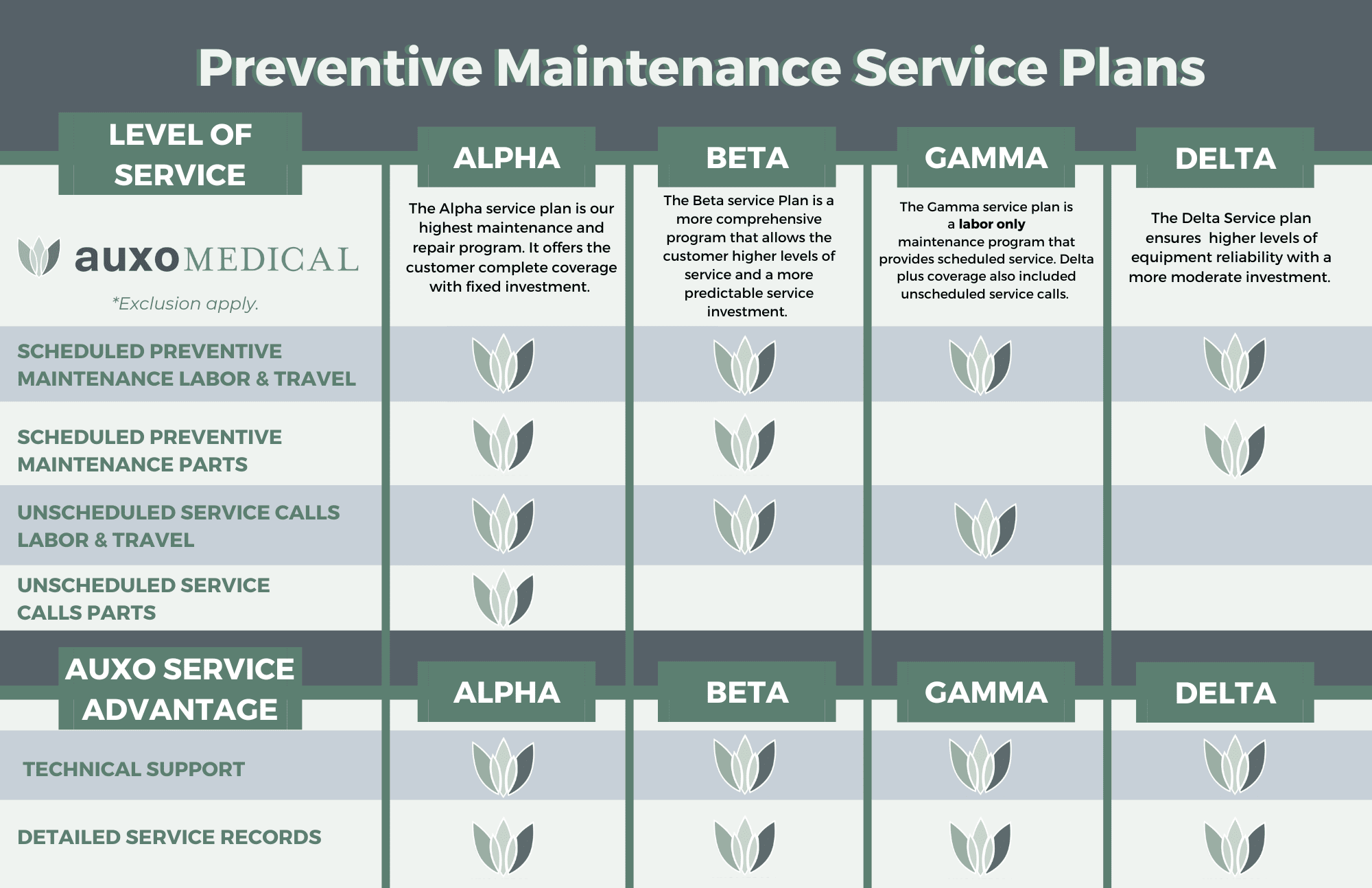
Signs Your Sterile Processing Equipment Needs Service
Call us when you notice changes like:
- Cycles taking longer than normal or timing out
- Repeated alarms or error codes
- Wet packs or inconsistent drying
- Inadequate cleaning results from washers
- Unusual noise, vibration, or odor
- Door sealing issues or visible leaks
- Unstable temperature/pressure readings
- Instruments coming out with residue or spotting (often tied to utility or performance issues)
Even “minor” symptoms can signal a developing problem. Early intervention can prevent a larger failure.
Our Service Approach: Clear, Documented, and Built for Healthcare
When you bring Auxo Medical in for sterile processing equipment maintenance or repair, our goal is to make the process easy on your team:
- Intake and triage (equipment type, symptoms, urgency)
- On-site evaluation and troubleshooting
- Repair or maintenance work based on findings
- Operational checks to confirm performance after service
- Service documentation you can file and reference later
We know your department is measured on turnaround time, readiness, and consistency—so we aim to deliver service that supports those metrics.
Sterile Processing Compliance and Documentation Support
Facilities often need maintenance records for internal quality review and external survey readiness. Our service documentation is designed to be easy to store, retrieve, and use for ongoing compliance workflows.
If your facility has specific documentation requirements, share them with us—so we can align reports and service deliverables accordingly.
Who We Help
We support sterile processing and instrument reprocessing operations across healthcare, laboratory and life sciences settings, including:
- Hospitals
- Ambulatory surgery centers (ASCs)
- Specialty clinics
- Research facilities
- Agriculture
- Food and beverage production
- Waste management
- Aerospace
- Other facilities with on-site reprocessing needs
If you’re managing multiple sites or a mix of equipment types, we can help standardize service planning to reduce surprises and improve consistency.
Why Choose Auxo Medical for Sterile Processing Equipment Service?
Sterile processing is high-stakes: it touches patient safety, OR schedules, staff workload, and compliance. We approach service with that reality in mind—prioritizing responsiveness, practical recommendations, and dependable documentation.
If you need a partner to help keep your SPD/CSSD equipment reliable day after day, we’re ready to help.
Frequently Asked Questions (FAQ)
What’s the difference between preventive maintenance and repair?
Preventive maintenance is scheduled service designed to prevent failures and keep performance consistent. Repair is corrective work performed after a problem occurs (alarms, failed cycles, leaks, breakdowns, etc.).
How often should sterile processing equipment be maintained?
Maintenance frequency depends on equipment type, usage volume, and manufacturer recommendations. Many facilities schedule PM at least annually—often more frequently for high-use washers and sterilizers.
Can you service multiple types of SPD equipment in one visit?
In many cases, yes. If you share your equipment list and priorities, we can plan visits to address multiple systems efficiently.
Do you provide documentation after service?
Yes—service documentation is a standard part of professional healthcare support and is important for audits and survey readiness.
Schedule Sterile Processing Equipment Service with Auxo Medical
If you’re looking for sterile processing equipment maintenance, repair, and preventive service, contact Auxo Medical to schedule support for your sterilizers, washers, ultrasonics, and other SPD/CSSD systems.
