
Healthcare accessibility is no longer “nice to have.” It’s the standard of care, it’s a civil rights issue, and it’s increasingly explicit in federal enforcement. If your facility uses exam tables, exam chairs, or weight scales, the fastest way to reduce risk and improve patient experience is to make sure you have accessible medical diagnostic equipment that meets the Access Board’s MDE standards—and to place that equipment in rooms that actually work for safe transfers and lift use. 1
At Auxo Medical, we help practices and facilities move from “We’ll figure it out later” to “We’re ready”—by sourcing the right ADA-compliant exam tables, barrier-free exam chairs, hi-lo tables, and accessible wheelchair scales, and by helping you think through real-world workflow issues like lift compatibility and clearance under the base. 2
The deadlines you can’t ignore (and who they apply to)
The July 8, 2026 deadline (HHS / Section 504 recipients)
If your organization receives federal financial assistance from HHS—often including participation in programs like Medicare or Medicaid—HHS’s accessible MDE requirements apply. HHS guidance highlights that recipients that use exam tables and weight scales have a two-year window (ending July 8, 2026) to have at least one accessible exam table and one accessible weight scale in place. 3
HHS also explains that if you purchase, lease, or otherwise acquire MDE after July 8, 2024, that equipment must meet the accessible MDE standards until you satisfy the applicable scoping threshold. 4
The August 9, 2026 deadline (DOJ / public entities under ADA Title II)
For state and local government entities (and the programs they operate), DOJ’s Title II rule sets parallel requirements. The DOJ regulation says that within two years after August 9, 2024, public entities must have at least one accessible examination table (if they use exam tables) and at least one accessible weight scale (if they use weight scales). That two-year mark lands on August 9, 2026. 5
The “minimum obligation” most facilities should plan around: one accessible table and one accessible scale
Even though the long-term scoping concept is percentage-based, the most immediate operational reality is straightforward:
- If you use exam tables, you should have at least one accessible exam table in place by the applicable compliance date. 3
- If you use weight scales, you should have at least one accessible weight scale in place by the applicable compliance date. 3
The American Academy of Pediatrics also summarizes this plainly for practices participating in Medicaid, CHIP, Medicare, or other HHS funding programs, and notes the later deadline for state and local government entities. 6
The scoping rule (the part many teams underestimate): “at least ten percent, but no fewer than one”
Once you start looking beyond the single required table and scale, scoping matters because it changes what you must do as you replace or add equipment.
For public entities, the DOJ regulation states that where a facility utilizes MDE, at least ten percent of the total number of units (but no fewer than one unit) of each type of equipment in use must meet the Standards for Accessible MDE. It also sets a higher threshold for facilities that specialize in treating conditions that affect mobility. 5
HHS describes a similar approach for recipients of federal financial assistance, including the ten percent requirement for most recipients and a higher percentage for mobility-focused providers. 4
The AAP also emphasizes that when practices procure new MDE, the new equipment must meet the accessibility standards until the practice reaches the applicable percentage threshold. 6
What makes an exam table or exam chair “accessible” under the MDE Standards
“Accessible” is not a vague label. The MDE Standards get very specific about transfer height, transfer surface size, transfer sides, supports, and lift compatibility. 2
Below is a practical, procurement-friendly checklist aligned to the standards that most commonly impact exam tables, exam chairs, and hi-lo procedure chairs.
Transfer height: the low-height range that drives accessibility
For diagnostic equipment used in a seated position, the standards require transfer surfaces to be height adjustable and include a low transfer position at seventeen inches and a high transfer position at twenty-five inches, plus additional positions between them. 2
In addition, the ADA.gov medical-care guidance explains why adjustable-height equipment matters and notes that a good option is a table that lowers to approximately wheelchair-seat height, commonly described as about seventeen to nineteen inches from the floor. 1
The AAP adds an important nuance for purchasing right now: while the standards specify a low transfer position of seventeen inches, the ADA and HHS final rules have allowed practices acquiring accessible exam tables to choose models that lower to somewhere between seventeen and nineteen inches, because the Access Board had not finalized the seventeen-inch requirement at the time of drafting and agencies may address it in supplemental rulemaking. 6
Transfer surface size (seated equipment): the “twenty-one by seventeen” rule
For equipment used by patients in a seated position, the standards require a transfer surface at least twenty-one inches wide and seventeen inches deep. 2
This measurement is one of the most common reasons “standard” exam chairs fail accessibility reviews—because the seat is too narrow, too shallow, or obstructed by fixed components that cannot be moved out of the transfer path.
Transfer access: two adjoining transfer sides
The standards also require transfer options on two adjoining sides of the transfer surface (with a limited exception in certain footrest configurations). 2
Operationally, this matters because not every patient can transfer the same way. Your room layout and the chair/table design need to support a safe transfer approach without forcing awkward angles.
Stirrups and leg supports: don’t assume stirrups alone are enough
Where stirrups are provided, the standards require leg supports as well. 2
In plain language: if your chair or table supports pelvic exams with stirrups, it also needs leg support capability that helps with positioning and securement, not just a place to rest the feet.
Transfer support rails: the specs that separate “helpful” from “compliant”
Support rails are not just comfort accessories. In accessibility terms, they can be critical transfer supports—and the standards define their geometry tightly.
Key requirements include:
- Location: transfer supports must be located very close to the transfer surface edge, measured horizontally. 2
- Length: end-transfer supports have a minimum length requirement, and side-transfer supports are longer (with certain exceptions). 2
- Height during use: the top of the gripping surface must fall within the required band above the uncompressed transfer surface. 2
- Diameter and shape: circular rails have a required outside diameter range; non-circular rails have perimeter and dimension requirements. 2
- Usability: the gripping surface must be continuous and not obstructed along the top or sides, and clearance must be maintained from adjacent surfaces/obstructions. 2
If you’re comparing products, we recommend treating rail specs as a “must verify” item—because many product pages highlight that rails exist, but not whether they meet the technical requirements.
Lift compatibility and base clearance: the stretcher/table detail that makes or breaks real-world transfers
A common real-world requirement we hear is exactly this: you want good clearance under the stretcher or table so a portable lift base can roll underneath.
That request is directly tied to the MDE Standards. The standards require diagnostic equipment to be usable with portable patient lifts and specify clearance requirements that can be met via clearance in the base or clearance around the base. 2
The standards also include a critical dimensional constraint often missed during purchasing: within the defined clearance zone, the base width at the edge of the examination surface is limited and can only widen gradually as depth increases. 2
Just as important, the ADA.gov medical-care guidance reminds clinics that rooms may need additional floor space to accommodate transfers and equipment such as a portable floor lift, and that clear floor space beside the exam table is necessary for wheelchair approach and transfer. 1
Our practical takeaway at Auxo Medical: when you evaluate an ADA-compliant exam table, exam chair, or stretcher, verify both the written lift-compatibility specs and the geometry of the base—then sanity-check it against the lift you actually use (or plan to use) in that room.
Don’t forget the room: accessible equipment can still fail if the exam room layout blocks transfers
Accessible care isn’t only about buying the “right” table. The room must let a wheelchair user approach, park, and transfer safely.
ADA.gov guidance highlights:
- Clear floor space next to the exam table is needed for wheelchair approach and transfer, with a minimum space described as thirty inches by forty-eight inches. 1
- Providing clear floor space on both sides can help accommodate right-side and left-side transfers. 1
- Turning space is also needed, commonly described as a sixty-inch diameter turning space or an equivalent T-shaped space. 1
This is why “we have an accessible table, but it’s wedged into the smallest room” is a problem. The AAP also stresses that accessible MDE must be readily accessible and usable—not delayed, hindered, or effectively unavailable due to location. 6
Accessible weight scales: what “accessible” means in practice
A wheelchair-accessible scale is one of the most visible—and most appreciated—accessibility upgrades you can make.
The Administration for Community Living explains that accessible scales allow wheelchair users to roll onto a large platform scale, use a walker and ramp, or transfer to a seat on the scale, and states that the ADA requires medical providers to have an accessible scale with a platform large enough to fit a wheelchair and sloped surfaces for safe access. 7
The MDE Standards also get highly specific about wheelchair space width, depth, entry type, and ramp features for changes in level, which is why we recommend verifying that the model you buy is explicitly designed for wheelchair access (not just marketed as “wide”). 2
What we recommend buying first (if you’re racing the July and August 2026 dates)
If today’s goal is fast compliance with minimal disruption, this is the order that typically delivers the biggest risk reduction and patient impact:
- An accessible exam chair or exam table with true low transfer height capability, compliant transfer surface dimensions, and compliant transfer supports
- An accessible wheelchair scale (platform/ramp design intended for wheelchair users)
- A room plan that preserves transfer space, turning space, and lift access
- Staff training and documentation so the equipment is usable in real visits, not just present in inventory 6
Midmark accessibility options we can help you evaluate (chairs and hi-lo solutions)
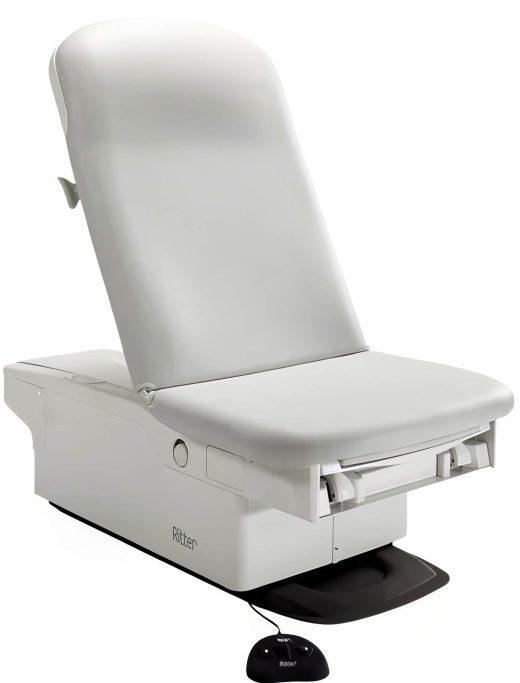
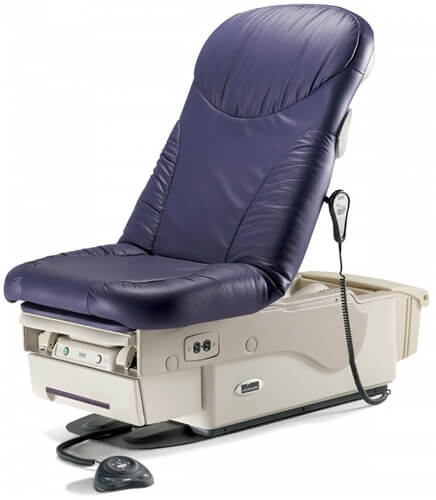
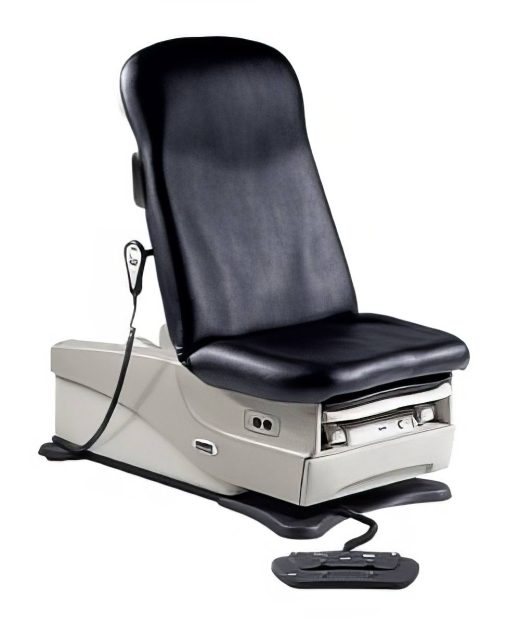
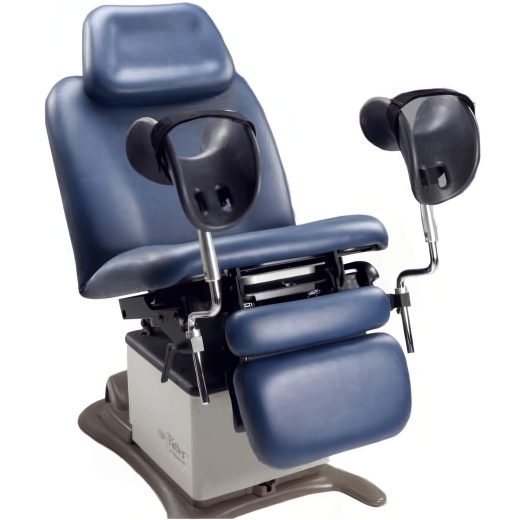
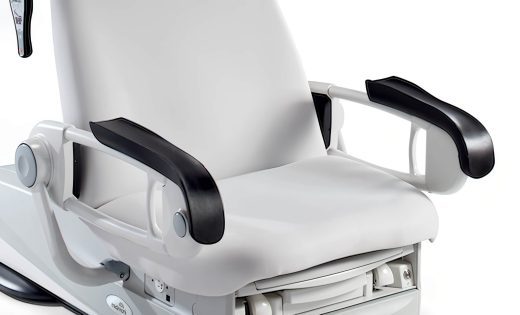
Many facilities ask us specifically about Midmark accessibility configurations. Midmark’s patient accessibility materials discuss compliance and highlight products positioned for accessibility-focused exam rooms, including the Midmark six-twenty-six Barrier-Free Examination Chair and the Midmark six-thirty-one Procedure Chair. 8
Midmark has also stated that its six-twenty-six Barrier-Free Examination Chair meets and exceeds the Access Board’s updated standards and referenced the Access Board’s emphasis on a seventeen-inch low seat height in its announcement. 9
At Auxo Medical, we can help you compare chair-based workflows versus traditional tables, and match the choice to your patient population, provider preferences, and room constraints—because the “best” option is the one your team will actually use correctly, every day.
A compliance reality check: you generally can’t just examine patients in their wheelchairs
ADA.gov’s medical-care guidance addresses a common but risky shortcut: examining a wheelchair user in the wheelchair because the patient can’t get onto the table independently. The guidance explains that this is generally not acceptable because it can be less thorough and not equal to the services provided to patients without disabilities, and it points to accessible adjustable-height tables as a practical solution. 1
This is exactly why accessible MDE is not just “compliance equipment.” It’s a quality-of-care upgrade.
Documentation, training, and “ready access” (what regulators and plaintiffs look at)
Buying equipment is only half of defensible compliance. The AAP emphasizes training staff to operate accessible MDE and assist with transfers and positioning, and it also notes that MDE must be located where it is readily accessible and usable. 6
HHS’s Section 504 fact materials similarly stress staff capability, proportionate dispersion across departments for larger systems, and the broader obligation to operate programs so they are accessible in their entirety. 4
Our practical advice at Auxo Medical: keep a simple file that includes product spec sheets showing MDE standards compliance, internal notes on where the equipment is located, and basic staff “how to use it” procedures. If you ever have to prove good-faith compliance, you’ll be glad you did.
Cost offsets: tax credits and deductions may be available for ADA-related access improvements
ADA.gov notes that (subject to IRS rules) there are federal tax credits and deductions available to private businesses to offset ADA compliance expenses, including references to the Disabled Access Credit and a barrier removal deduction. 1
We’re not tax advisors, but we regularly recommend that practices talk with their CPA early—because the financial timing can affect when you decide to purchase an accessible exam chair, hi-lo table, or wheelchair scale.
How we help at Auxo Medical
When you work with us on ADA-compliant exam room equipment and accessible medical diagnostic equipment, we focus on making the purchase “stick” operationally:
- We help you select equipment that aligns with the MDE Standards for transfer height, transfer surface size, transfer sides, lift compatibility, and transfer supports
- We help you think through room fit, including transfer clearance and lift access (especially important when you need clearance under the stretcher or table base) 2
- We help you standardize so staff can reliably place patients safely, consistently, and quickly 6
If you’re close to the July 8, 2026 or August 9, 2026 deadline, the best time to act is now—because lead times, delivery, installation planning, and staff readiness can take longer than expected.
View and Request a Quote on the Selected “Accessible” Exam Tables and Products Available at Auxo Medical Below or Contact our Sales Representatives for Further Details.
-
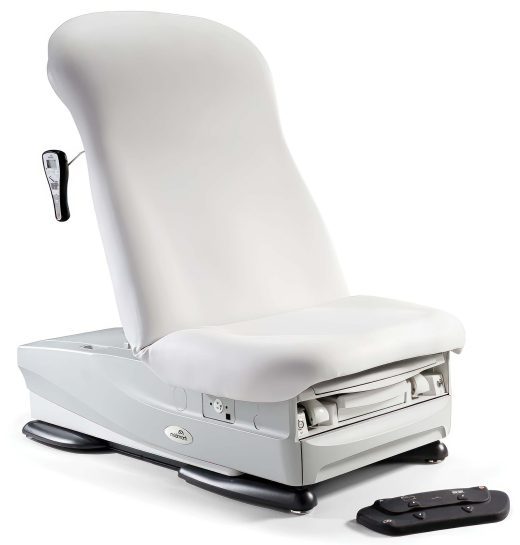
Midmark 625 Power Exam Table
The Midmark 625 features a fully integrated and accurate digital scale, which weighs patients quickly, efficiently and discreetly. All-in-one handheld control does it all. This simple handheld device controls the entire table, including seat height and seatback angle adjustment, scale… -
Midmark Articulating Knee Crutch System
The Midmark Articulating Knee Crutch System (Part number 9A411002) offers a flexible and adjustable solution for supporting patients' knees and legs during examinations on Ritter 230 or Midmark 630 procedure tables. The system includes a bracket set and two knee… -
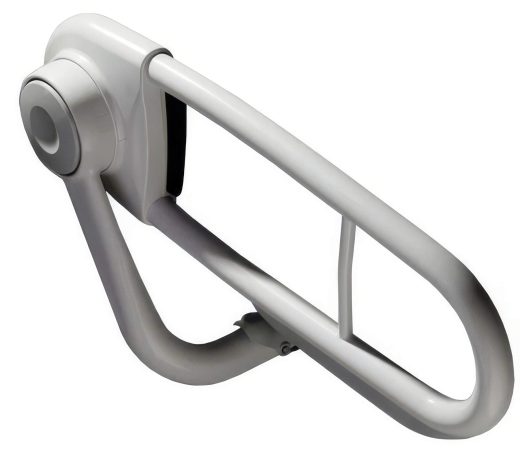
Midmark Exam Table Patient Support Rail – PAIR
The Midmark Exam Table Patient Support Rail (Pair), part number 9A600001, is designed to enhance patient safety and stability on compatible Midmark examination chairs, including Ritter 224, 225, and Midmark 626, 627 Barrier-Free models. Each rail features a 1.25-inch diameter… -
Midmark Patient Support Rails+ Refurbished
The Midmark Patient Support Rails+ (Refurbished) are versatile, articulating safety and support rails designed to enhance patient stability and comfort during examinations and procedures. Compliant with US Access Board standards, these rails rotate and lock into three different positions, allowing… -
Midmark Standard Knee Crutch System
The Midmark Standard Knee Crutch System (Part number 9A410002) is a versatile support accessory designed for use with Ritter 230 and Midmark 630 procedure tables. Specifically intended to support patients' knees and legs during examinations, this latex-free system enhances patient…
Educational content only. This is not legal advice. If you need legal guidance on applicability, exceptions, or undue burden analysis, consult qualified counsel. 5
Sources:
- Access to Medical Care for Individuals with Mobility Disabilities (ADA.gov) —
https://www.ada.gov/resources/medical-care-mobility/ - Complying with 2024 ADA/HHS Requirements for Accessible Medical Diagnostic Equipment (American Academy of Pediatrics) —
https://www.aap.org/en/practice-management/liability-and-regulation/complying-with-2024-adahhs-requirements-for-accessible-medical-diagnostic-equipment/ - New Requirements for Accessible Medical Diagnostic Equipment (HHS PDF) —
https://www.hhs.gov/sites/default/files/new-requirements-accessible-medical-diagnostic-equipment.pdf - Patient Accessibility (Midmark) —
https://www.midmark.com/medical/medical-solutions/patient-accessibility - Midmark 626 Barrier-Free Examination Chair product page (Midmark) —
https://www.midmark.com/medical/products/barrier-free-examination-chairs/detail/midmark-626-barrier-free-examination-chair - US Access Board releases new standards for examination and procedure chairs (Midmark newsroom / press release) —
https://www.midmark.com/newsroom/news-releases/2026/02/17/us-access-board-releases-new-standards-for-examination-and-procedure-chairs - Accessible scales (Administration for Community Living) —
https://acl.gov/ada/accessible-scales - Final Regulatory Assessment: Medical Diagnostic Equipment Accessibility Standards (U.S. Access Board) —
https://www.access-board.gov/mde/regulatory-assessment.html
